
Blue Reflections*

A Pause on the Present Moment
Lake Urmia is dying; the Zayandeh Rud has dried up; wetlands have given way not to life but to cracked earth; and Mount Damavand is now rarely snow-capped (although due to snowfall in recent days, it is currently covered in snow). These are more than simple warnings for our country and our people; they are signs of a major catastrophe and a form of collective mourning.
Social media is flooded with reports, images, analyses, and even “quick fixes” for saving water. Yet as the volume of circulating information increases, distinguishing truth from falsehood becomes more difficult. The accumulation of information, without mechanisms for evaluation and classification, often leads to confusion rather than clarity.
Today’s water and environmental crisis is no longer the concern of a small group of specialists; it is a national issue. People in cities, villages, and provinces across the country live with it daily, and everyone proposes solutions based on their own experiences and sense of belonging. Just as during the World Cup every viewer suddenly becomes a football coach, in the water crisis every citizen imagines themselves an analyst, expert, or policymaker. On the one hand, this broad participation reflects public sensitivity and concern; on the other, it reveals confusion in understanding the problem and identifying solutions.
The problem statement is clear: Iran is facing an unprecedented environmental crisis. But overcoming this crisis is not possible merely through the accumulation of “information.” Information must be evaluated, filtered, and transformed into practical solutions. Many narratives and news items are, in practice, reflections of political, administrative, or regional disputes. Reducing the water crisis to conflicts between two officials, two provinces, or two local groups diverts attention from the structural roots of the problem.
To find solutions, we must first correctly identify the challenges.
The Difficulties: Multiple Dimensions of a Crisis
The current water crisis—or, as some researchers describe it, “water bankruptcy”—has two main origins: natural and human-made. This article focuses on the human origin: the set of policies, decisions, and governance practices over the past four decades that have intensified the crisis and led to the current situation.
Natural Origins
Iran is an arid, mountainous country with low precipitation. Its several-thousand-year-old civilization emerged within this very climate and adapted to it. Snowy winters and hot summers were, until just a few decades ago, a shared experience across the country.
However, global climate change—including rising global temperatures, reduced snowfall, and the melting of glaciers—has altered this pattern over the past two decades. These changes are real and significant, but they are not the primary cause of Iran’s water crisis. The current crisis is less natural than it is structural and human-made. Moreover, Iran’s population has nearly tripled over the past fifty years, growing from about 35 million to more than 90 million.
Note: Global warming itself is the result of human activity and increased greenhouse gas emissions, with industrialized countries bearing the greatest responsibility. Since this article focuses on the role of domestic policies and decisions in Iran, this issue is not discussed in detail here.
Human Origins: Governance, Policy, and Development
The key question is this: over the past four decades, what strategies and decisions in agriculture, industry, energy, and water resource management have brought us to this point? Were these decisions based on rational assessment, long-term foresight, and environmental considerations, or were they driven by short-term needs, political slogans, and the interests of powerful and rent-seeking groups?
Below, the most damaging orientations are reviewed.
Independence and Self-Sufficiency: From Slogan to Environmental Disaster
One of the main slogans of the 1979 Revolution was “independence,” but in domestic policy this concept gradually translated into “self-sufficiency.” Agricultural self-sufficiency—especially in products such as wheat—became a development priority, without regard for water limitations or land-use planning.
Farmers were encouraged to expand cultivated land, take loans, and increase production. In many regions, deep and semi-deep wells—both legal and illegal—were drilled. Today, there are around one million wells in the country, while the renewable capacity of groundwater aquifers is far lower. The result has been the depletion of aquifers, land subsidence, the drying up of qanats, and the loss of future water reserves.
Excessive Dam Construction
Widespread and unregulated dam construction, carried out without environmental studies or long-term impact assessments, has been one of the main drivers of the water crisis. Dams were built to generate electricity and supply agricultural water, but the outcome has been the drying of rivers, wetlands, and lakes; reduced environmental flows; disruption of natural cycles; and extensive sedimentation.
In a country with the world’s second-largest gas reserves, insisting on electricity generation from dams has neither economic nor environmental justification. Nevertheless, a network of economic interests and extensive rents turned dam construction into a profitable—albeit destructive—industry.
Development of Water-Intensive Industries in Arid Regions
Water-intensive industries such as steel, copper, and ceramics should logically be located near seas, where stable water sources exist. Yet in Iran, under the banner of regional development and driven by political and security considerations, these industries were established in central and arid regions.
To supply them with water, inter-basin water transfer projects were implemented—projects that have played a major role in drying up the Zayandeh Rud and the Gavkhouni Wetland. No form of development should take life from one region and transfer it to another. Water transfer for industrial development is a clear example of unsustainable development.
The Necessity of Changing Agricultural Patterns
Iran’s current agricultural model is water-intensive, low-efficiency, and incompatible with the climate. Cultivating water-intensive crops in arid regions, traditional irrigation methods, and the absence of incentive-based policies to reduce water consumption have worsened the situation. Transitioning to low-water crops, increasing efficiency, managing demand, and providing targeted support to farmers are unavoidable necessities.
Multiple Decision-Making Centers
Iran’s water crisis is the direct result of fragmented management. The Ministry of Energy, the Ministry of Agriculture Jihad, the Environmental Protection Organization, military and security institutions, provincial governments, and local structures each control part of the decision-making process. This has led to contradictory decisions and a lack of accountability. The country needs to move toward “basin-based governance” and integrated water resource management—a model considered the most effective approach to water management worldwide.
Rents and Powerful Interest Groups
Networks of power and vested interests—from large well owners to dam-building mafias and water-intensive industries—have played a significant role in major decisions. In many cases, water projects have been defined not on the basis of environmental necessity but according to the economic profits of specific institutions. As long as these rent-seeking networks are not restrained, reforming the water system will not be possible.
Competition and Tension Between Cities and Provinces
The absence of a fair water allocation system has fueled widespread tensions among provinces. Water rights have become an identity issue, and in the absence of an effective state, each region sees itself as a victim. The only way to reduce these tensions is through scientific, transparent, and equitable water resource management.
Cultural and Customary Factors in Water Allocation
Traditional water-right systems are part of Iran’s history, but today—due to population changes and the entry of powerful institutions—they have lost their former effectiveness. Modernizing these systems through public participation, formal registration of water rights, and aligning customary practices with scientific standards is an undeniable necessity.
What Should Be Done? What Are the Major Remedies?**
Returning to “ground zero”—a time when today’s crises had not yet emerged and the country’s population was one-third of its current size—is neither possible nor realistic. The main question, therefore, is this: under current conditions, and with the necessity of ecological sustainability in mind, which broad solutions can help reduce the water crisis?
In recent years, three proposals have been discussed more than others among experts and the public: the Iranrud project, cloud seeding and cloud transfer to arid regions, and transferring water from the Persian Gulf and the Sea of Oman to central Iran. Below is a brief reflection on each.
Iranrud
Iranrud is a plan to connect the Sea of Oman to the Dasht-e Kavir by digging a canal, creating an artificial lake in the desert, and then connecting it to the Caspian Sea. This project has been proposed by various governments over several decades but has remained a fantastical idea and popular social media content. Technical complexity, astronomical costs, and severe environmental consequences have left this plan without practical support. Therefore, a detailed discussion of it is unnecessary.
Cloud Seeding and Cloud Transfer
Cloud seeding, as a supplementary solution, has been tested in some countries and on a limited scale in Iran. While this method may help increase precipitation on a small scale, it cannot compensate for the widespread water shortages affecting drinking water, agriculture, industry, and the restoration of dried rivers and wetlands. Strategic reliance on this method is less a solution than a form of unrealistic optimism.
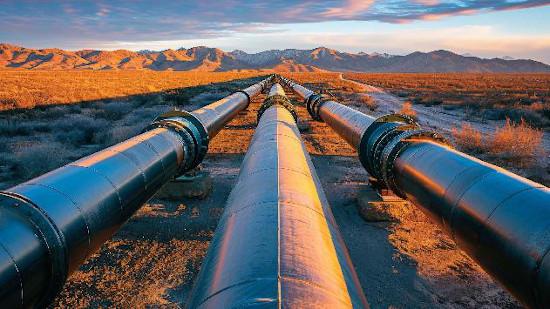
Water Transfer from the Persian Gulf and the Sea of Oman
Over the past decade, the consequences of developing water-intensive industries in central Iran—including the drying of the Zayandeh Rud and the Gavkhouni Wetland—have become a national issue. Widespread protests by farmers in eastern and western Isfahan, who were the direct victims of lost water rights, demonstrated that the water crisis was no longer a local matter. Although the government initially attempted to suppress these protests, broad social support forced it to retreat and respond.
Under these conditions, the very groups that had contributed to the formation of the crisis—owners of water-intensive industries and their powerful lobbies—presented two options: relocating industries to the southern coasts or transferring water from the south to the center. The second option was chosen.
In this plan, seawater is desalinated in facilities near Bandar Abbas and then transferred via large pipelines to central regions. Several phases have already become operational, and others are underway. This project faces serious challenges: heavy investment costs, disposal of desalination brine, energy requirements and pumping stations, and long-term environmental impacts.
In this article, reference to this plan is not as an ideal solution, but as an attempt to compensate for a past strategic mistake—an attempt that has now become a tangible reality. The main emphasis is that water transfer, if unavoidable, must be used solely for drinking water supply, not for industrial expansion or agricultural growth. Had industrial development from the outset been based on land-use planning and environmental sustainability, such costly and risky projects would not have been necessary.
Securing Funding and Technical Capacity
No reform is possible without sustainable funding, appropriate technology, and transparent management. Investment in the water sector must be directed toward reducing consumption, increasing efficiency, and restoring ecosystems—not toward continuing high-risk, structure-centered projects.
Concluding Remarks
Iran’s water crisis is the result of a series of incorrect political, economic, and managerial decisions—but it is not yet too late. Acknowledging the reality of the crisis, ensuring transparency, engaging public participation, and moving away from rent-driven, structure-centered development toward sustainable, balanced, and justice-oriented development are the prerequisites for beginning the path to water salvation.
Saving water means saving Iran’s future.
And that future is possible only through scientific, accountable, and human-centered governance.
December 18, 2025 – 27 Azar 1404
Footnotes
* Title selection: Reflection as a path toward water, hope, and peace!
** A set of strategies and solutions for overcoming the water crisis is presented here.