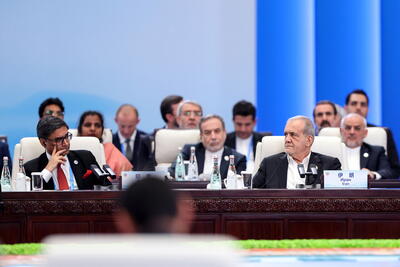
The Bishkek summit was not a diplomatic defeat for Iran, but neither was it the major victory some in Tehran have portrayed it as.
The Shanghai Cooperation Organization condemned the military attacks on Iran and called for the crisis to be resolved through political and diplomatic means. For Tehran, this was valuable political backing at a time of intense international pressure.
But the limits of that support are clear. The summit produced no security guarantees, military assistance, sanctions relief, or concrete economic measures to protect Iran from U.S. pressure. Even the final statement stopped short of explicitly naming the United States and Israel. The organization’s members have different strategic interests and are unlikely to accept the costs of a direct confrontation with Washington on Iran’s behalf.
China and Russia remain important partners for Tehran, but they also pursue their own national interests. This is why Iran’s “Look East” strategy cannot realistically substitute for a balanced foreign policy or resolve its confrontation with the West.
Perhaps more revealing was President Masoud Pezeshkian’s message that Iran remains prepared to return to an interim agreement with Washington if the United States fulfills its commitments. Even Tehran’s position on freedom of navigation through the Strait of Hormuz was linked to U.S. compliance.
That message may be more significant than the summit’s anti-American rhetoric. It suggests that, despite its growing ties with China and Russia, Iran still recognizes the importance of diplomacy with Washington in reducing tensions and addressing sanctions.
The summit’s longer-term initiatives on logistics, nuclear security, and green technology, along with Pezeshkian’s proposal for monetary, insurance, and energy mechanisms within the SCO, could eventually strengthen the organization’s independence from Western economic systems. But there is a long road between political declarations and effective institutions.
So, what did Iran really gain in Bishkek?
Political support, diplomatic space, and another opportunity for engagement—but not sanctions relief, economic recovery, or a security guarantee.
The real test now is whether Tehran can turn that diplomatic space into de-escalation, an agreement with Washington, and tangible economic benefits. If it cannot, Bishkek will be remembered less as a strategic breakthrough and more as a symbolic diplomatic success.
 چاپ
چاپ
افزودن دیدگاه جدید